3/12: When Women’s Rights Become a War Narrative: From Gaza to Iran, Whose Lives Are Worth Saving?
By Kening Zhang | March 12, 2026
In the Western-dominated international discourse, women’s rights are often reduced to a one-dimensional narrative of “salvation.” Yet when the price of such “salvation” is the loss of more innocent lives, and when systemic violence is concealed beneath the banner of protection, we are compelled to re-examine: Who defines women’s rights? And whose lives are endowed with the value of being “worth saving”?
I. The Brutal Facts of War

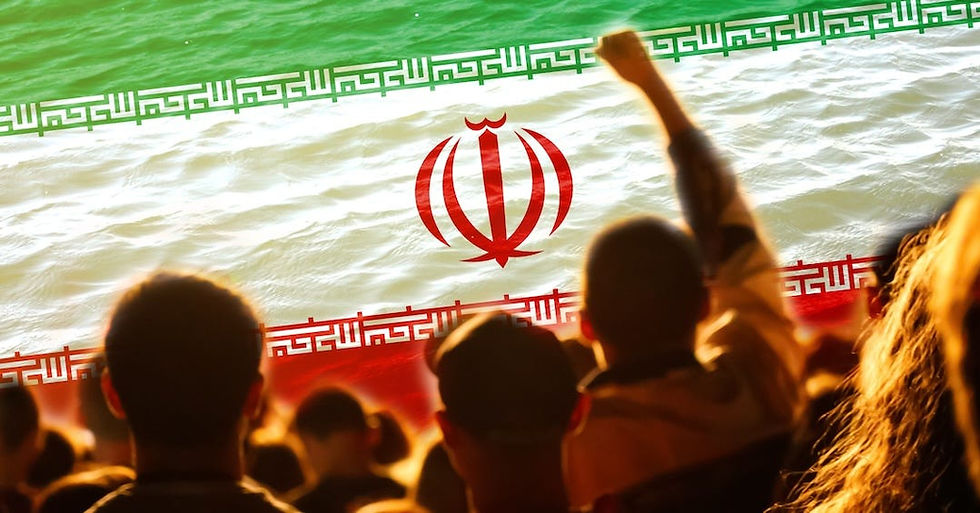
On February 28, 2026, the Shajarat Tayyibah Girls’ Elementary School in Minab, Hormozgan Province, southern Iran, was flattened in a joint U.S.-Israeli airstrike. According to Iranian officials and multiple international media reports, the strike killed at least 165 people, the vast majority of them girls aged 7 to 12, with another 96 injured. This was not an isolated tragedy but rather the “single deadliest incident” of civilian casualties in the U.S.-Israeli military campaign against Iran.

UNESCO strongly condemned the attack, stating it constituted a serious violation of international humanitarian law and expressed deep shock at the targeting of educational facilities during conflict. While U.S. and Israeli officials acknowledged the airstrike, they claimed the target was a “military facility and command center,” attributing civilian casualties to the Iranian regime’s placement of military infrastructure near the school. This “human shields” justification mirrors the rhetoric used to defend actions in Gaza and echoes the historical tragedy of the Al-Amiriya shelter—where on February 13, 1991, in Baghdad, a shelter designed to protect civilians from airstrikes became a scene of horror as the U.S. Air Force dropped two laser-guided bombs, killing at least 408 people instantly (some estimates run into the thousands), with temperatures soaring to 4,500°C, vaporizing the innocent victims.
II. The Historical Paradox of the Western “Women’s Rights Narrative”
The United States and Israel have long constructed a narrative about the Muslim world concerning “women’s rights”: that Islamic societies oppress women, while the West represents female freedom and liberation. This narrative has been repeatedly invoked to justify military interventions.
The 2001 war in Afghanistan was justified in part by the U.S. aim to “liberate Afghan women from Taliban oppression.” The 2003 Iraq war systematically depicted Saddam Hussein’s regime as oppressing women. The longstanding propaganda against Iran persistently focuses on issues like the mandatory hijab and women’s restricted rights, portraying Iran as a typical example of religious theocracy oppressing women.
The war in Gaza provides more direct evidence:
The Israel Ocuppied Forces (IOF) unusually admitted in late January 2026 that approximately 70,000 Palestinians had been killed in Gaza since the conflict began. According to related statistics, women, children, and the elderly constitute about 56.2% of the total death toll. On Israel’s blockade list, anesthesia machines, ICU beds, and temperature-controlled medicines are classified as “dual-use” or prohibited items. Dozens of schools in Gaza have been completely destroyed, 95% of schools are damaged, 785,000 students are unable to attend school, and over 1,000 students have been killed in the conflict. Regarding housing, 106,000 housing units have been destroyed, leaving 2 million people homeless.
These facts directly challenge the assumption that Israel, as a “democratic state,” inherently protects women and children. More tellingly, when the victims are Palestinian, the intensity of the international community’s response, media attention, and the urgency of humanitarian aid are noticeably lower compared to similar tragedies in other regions. This differential concern itself exposes a hierarchy within the global discourse of human rights.
III. The Racial Hierarchy Underlying Gender Discourse
The Western narrative of “women’s liberation” is never merely about gender. Some scholars term this phenomenon “imperial feminism”—leveraging the banner of women’s liberation to provide moral legitimacy for geopolitical intervention and imperial expansion. This narrative is embedded with a profound racial hierarchy. Within this discursive framework, white women are constructed as symbols of civilization, progress, and freedom; Muslim women and women of color are depicted as victims of “backward traditions,” passive objects in need of salvation by the white West.
This narrative of the “white savior” and the “victim of color” effectively extends the logic of the colonial-era “civilizing mission.” Colonial empires claimed they entered colonies to end slavery, abolish practices like sati, and save local women. Yet colonial rule itself often brought violence, plunder, and the destruction of social structures.
Within the narrative structure of imperial feminism, Muslim women are neither political agents with full autonomy nor “persons” equal to Western women. They are merely symbolic tools used to prove Western moral superiority and legitimize military intervention.
IV. The Double Standard of Imperial Feminism

In the American political narrative, Hillary Clinton and Madeleine Albright are hailed as “beacons of feminism” and symbols of “shattering the glass ceiling.” Clinton famously declared that “women’s rights are human rights,” and Albright left us with the saying, “There’s a special place in hell for women who don’t help other women.” Yet these two figures, seen as benchmarks for women’s empowerment, during their tenures as Secretary of State, spearheaded policies of harsh sanctions and military deterrence against Iran.
Clinton explicitly stated she would “not take any option off the table” to prevent Iran’s nuclear program and pushed for UN sanctions against Iran; Albright was known for her hawkish diplomatic style. They leveraged women’s protests within Iran (such as the 2009 Green Movement) as bargaining chips for diplomatic pressure, while turning a blind eye to the plight of ordinary Iranian women and children suffering under sanctions and military threats. This selective concern reveals the essence of “imperial feminism”: when women’s rights serve geopolitical objectives, they are elevated; when women’s lives impede imperial interests, they are sacrificed.
Those political elites most active in promoting gender issues on the international stage often simultaneously remain silent about violence against women and children of color. For instance, the massive deaths of women in Gaza, the bombing of girls’ schools in Iran, and prolonged humanitarian disasters in places like Yemen are seldom incorporated into international discussions on women’s rights. This illustrates a brutal reality: in the global political narrative, not all women’s lives are valued equally. Or, more sharply: when the victims are white women, it’s a “crisis of civilization”; when the victims are Muslim girls, it’s often merely “collateral damage.”
V. When the Victims Are Women of Color
The Western political elites who most vocally champion “women’s rights” on the international stage—those who pass gender equality laws, initiate movements like #MeToo, and speak of women’s empowerment at the UN—often exhibit astonishing silence or understatement when confronted with the deaths of women and children of color in Gaza, Iran, Yemen, Afghanistan, and elsewhere.
This “selective empathy” reveals a cruel reality: on the scales of global political value, not all women’s lives carry equal weight. When the victims are white women, it is a “crisis of civilization,” a “human tragedy”; when the victims are Muslim girls, it is often just “collateral damage of war,” an “unavoidable cost.”
The same cohort of political elites who can rally and advocate for women’s rights in their own countries can, without cognitive dissonance, support, fund, or acquiesce to the slaughter of women of color in distant lands. Their feminism seems to have an invisible boundary, one that coincides precisely with the lines of race and geopolitics.
VI. The Hypocrisy Within Western Society
The Epstein case acts as a mirror, reflecting the profound hypocrisy of the Western power elite on gender issues:
On January 30, 2026, the U.S. Department of Justice began releasing the final batch of over 3 million pages of core documents related to the Jeffrey Epstein case. The files show that former President Bill Clinton took 27 flights on the “Lolita Express,” current President Donald Trump’s name was mentioned over 1,000 times, and Britain’s Prince Andrew was accused of sexual assault by multiple victims. Yet, faced with irrefutable evidence, these elites at the pinnacle of power and wealth have largely assumed poses of innocence.
The secret 2008 non-prosecution agreement allowed Epstein to plead guilty to the minor charge of soliciting a minor for prostitution, receiving a 13-month sentence served in a resort-like setting. This agreement was by no means judicial leniency but a protective web woven by the elite with power, blatantly demonstrating how privileged groups in Western “rule-of-law” societies can easily escape laws that apply to everyone else.
In August 2019, Epstein died under suspicious circumstances in a New York City correctional center, with the official “suicide” conclusion riddled with doubts. After the 2026 document release, the DOJ announced the review was closed with no new prosecutions, and Deputy Attorney General Todd Blanche even publicly argued that “partying with Jeffrey Epstein is not a crime.” To date, apart from Epstein himself and his associate Ghislaine Maxwell being punished, none of the other implicated elites have faced prosecution.
This illustrates that so-called women’s rights values do not necessarily translate into genuine protection for women, especially vulnerable women. In the realm of international politics, it more often degenerates into a tool—a narrative device to provide moral legitimacy for geopolitical objectives. It is elevated when war needs to be waged and set aside when allies’ atrocities need covering up.
VII. The Essence and Cycle of War Narratives
The U.S. and Israel are not the only countries to employ “moral war” narratives, but they have developed it into the most systematic political technology:
Create Moral Opposition: Label the target country/group as morally evil for “oppressing women, abusing children.”
Declare a Liberation Mission: Self-anoint the role of “savior” and “liberator,” cloaked in moral halo and historical destiny.
Launch Actual War: Carry out military strikes under the moral banner, justifying violence.
Cover Up Actual Consequences: Describe civilian casualties as “unavoidable collateral damage” or blame the other side for “using human shields.”
The end product of this cycle is always: civilian deaths, children’s deaths, women’s deaths, and social infrastructure collapse—precisely the suffering it claims to eliminate. Meanwhile, the war-makers complete a discursive transformation from “perpetrators of violence” to “moral saviors.”
VIII. The Real Impact on Gaza
The current escalation of war between the U.S.-Israel and Iran could trigger a chain of effects for Gaza, already mired in a humanitarian catastrophe:
Diverted Attention: International focus and resources for Gaza’s ongoing crisis will be diluted by the broader Middle East conflict.
Enhanced Legitimacy: Israel may gain wider military operational freedom and diplomatic cover under the pretext of “countering the Iranian threat.”
Marginalized Humanitarian Crisis: Gaza’s already extreme survival situation may sink further down the international agenda. Since January 1, 2026, Israel’s revocation of operating permits for some humanitarian aid organizations in Gaza has further restricted humanitarian access.
Regional Spiral of Risk: An expanded conflict could push the entire Middle East to the brink of war, with civilians—especially women and children—bearing the heaviest cost.
IX. The Accusation of the Nameless
In the grand narrative of geopolitics, the girls who died in the Iranian girls’ school have no names. They will not appear in Pentagon briefings, be listed in congressional hearing records, or be mentioned in politicians’ war speeches. On the strategist’s sand table, they are merely a number; in political statements, they are “regrettable collateral damage.”
Yet their deaths, and the deaths of the equally nameless girls in Gaza, tear open a carefully polished truth: in the alchemy of war discourse, women’s rights is often just a convenient slogan, while the lives of girls in flesh and blood are a calculable, weighable, and ultimately expendable cost.
When the fragments of childhood mix with political lies, those silent names pose the world’s sharpest question: Whose women are deemed worth saving, and whose girls are destined for sacrifice? The answer to this question is already written in the ruins of Gaza, in the tiny, unclaimed shoes, and in every future destroyed in the name of “liberation.”


Comments